4410 East Riverside Dr #150, Austin, TX 78741
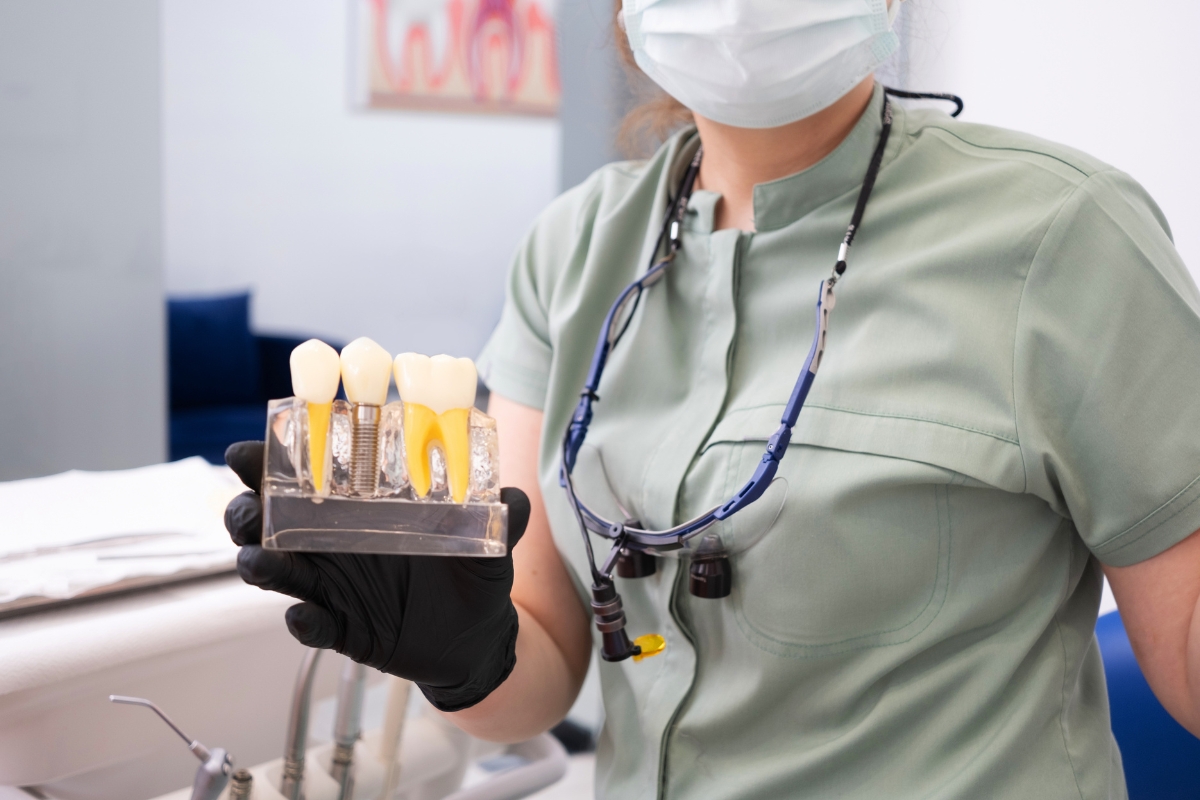
Losing a tooth is stressful enough. Then you start researching replacements, and the word “surgery” shows up in every article you read. If the idea of bone grafting, incisions, and months of healing has kept you from replacing a missing tooth, you’re far from alone. Many people searching for dental implants in Austin are really searching for one thing: a solution that works without a long, invasive process.
Here’s the honest answer. A truly non-invasive implant doesn’t exist yet. But mini dental implants get remarkably close, and for the right patient, they can mean a smaller procedure, a faster recovery, and a shorter path to eating comfortably again.
What “Non-Invasive” Really Means in Dentistry
In everyday conversation, “non-invasive” means nothing breaks the skin. By that definition, no implant qualifies. Every dental implant is a small post placed into the jawbone, and reaching the bone requires an opening in the gum tissue.
What clinicians actually mean by minimally invasive is different. It means:
- Smaller openings in the gum, often without cutting a flap
- Less bone removal during placement
- Fewer stitches, sometimes none at all
- Less post-operative swelling and soreness
- A shorter overall treatment timeline
Mini implants check most of those boxes. That’s why patients often describe the experience as far gentler than they expected.
What Are Mini Dental Implants?
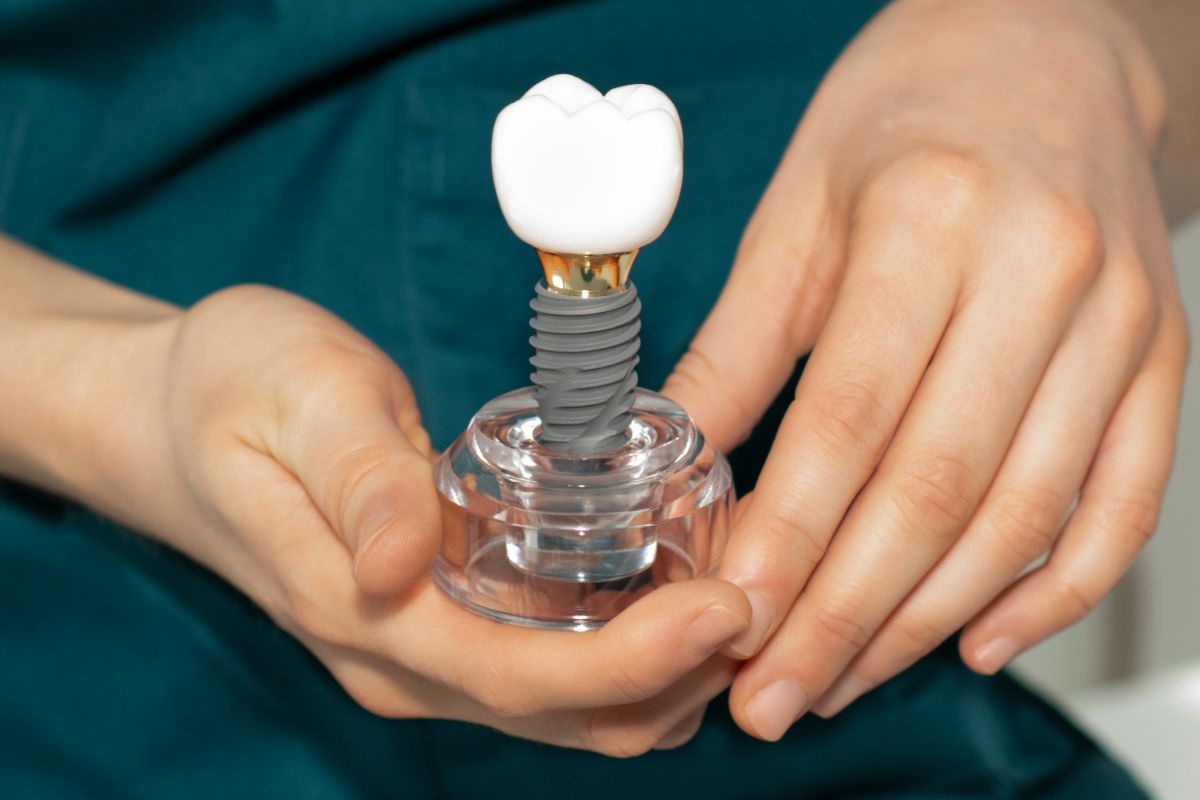
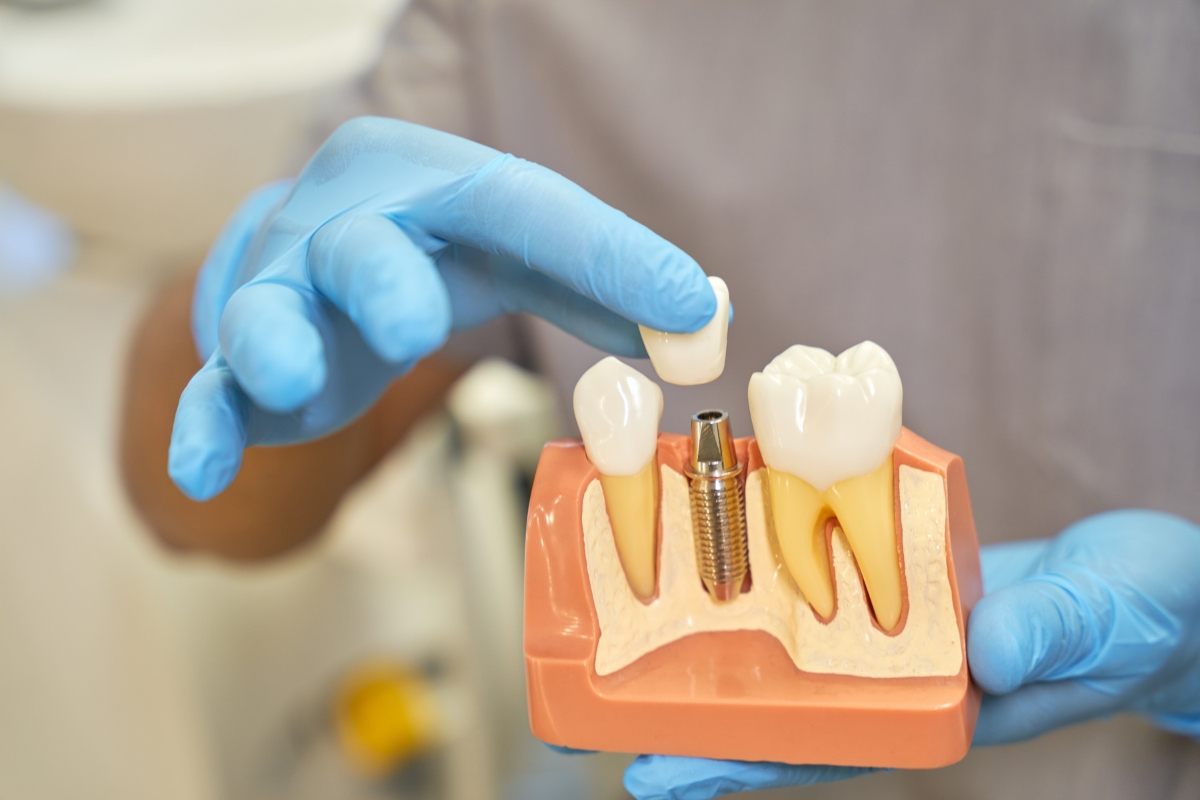
A mini dental implant is a smaller-diameter titanium post, typically under 3 millimeters wide, compared with roughly 3.5 to 6 millimeters for a conventional implant. Think of it as a narrower screw doing a similar job.
Because the post is slimmer, the site prepared in the bone is smaller. That single difference changes the entire feel of the appointment.
One-Piece Design, Simpler Placement
Most conventional implants come in two parts: the post that fuses with bone, and an abutment that connects to the crown. Mini implants are usually a single piece, with the connector built right into the post.
Fewer components means fewer steps, fewer appointments, and less time in the chair.
How Mini Implants Differ From Traditional Dental Implants in Austin
Both options restore function and appearance. They simply take different routes to get there.
Traditional implants:
- Wider posts, often stronger long-term load capacity
- Frequently require a gum incision and sutures
- May need bone grafting if the jawbone has thinned
- Healing and integration often takes three to six months
Mini implants:
- Narrow posts placed through a small opening
- Often suitable when bone width is limited, sometimes avoiding a graft
- Many cases are completed in a single visit
- Restorations can sometimes be attached the same day
Neither is universally “better.” The right choice depends on your bone, your bite, and what you’re replacing.
Who Tends to Be a Good Candidate
Mini implants aren’t for everyone, and a trustworthy dentist will tell you that upfront. They tend to work well for patients who:
- Have narrow jawbone ridges after years of tooth loss
- Want to stabilize a loose lower denture
- Are replacing smaller teeth, such as lower front teeth
- Want to avoid or postpone a bone graft
- Prefer a shorter, simpler appointment for medical or anxiety-related reasons
They may be less suitable for patients who grind their teeth heavily, have active gum disease, or need to replace large molars that absorb significant chewing force.
What the Procedure Actually Feels Like
Most patients are surprised by how straightforward the visit is.
After local anesthetic, your dentist creates a small channel in the bone and threads the mini implant into place. In many cases, no flap is raised and no sutures are needed.
The appointment for a single mini implant often takes under an hour. Because the implant achieves immediate stability, a denture or crown can sometimes be connected the same day.
Recovery in Plain Terms
Expect mild tenderness for a day or two, similar to a bruise. Over-the-counter pain relief is usually enough. Most people return to work the next day and to soft normal eating quickly.
If you’ve been putting off treatment because of what recovery might involve, this is the part worth discussing with a dentist in person.
The Honest Limitations
Good care includes clear expectations, so here are the trade-offs.
Mini implants have a smaller surface area contacting bone, which can mean less long-term load tolerance in high-force areas. Research on long-term survival is also less extensive than for conventional implants, which have decades of documented outcomes.
They are not a workaround for untreated gum disease or uncontrolled diabetes, both of which affect healing. And in some cases, a traditional implant genuinely is the more durable investment.
A good consultation weighs all of this rather than steering you toward one answer.
Caring for Your Implant Long-Term
Maintenance is refreshingly ordinary:
- Brush twice daily and clean around the implant carefully
- Floss or use interdental brushes as directed
- Keep regular hygiene visits, since gum health protects the implant
- Wear a night guard if you clench or grind
- Avoid using teeth as tools on hard objects
Consistent home care does more for implant longevity than almost anything else.
Taking the Next Step
Mini implants aren’t magic, and they aren’t truly non-invasive. What they offer is a meaningfully gentler path for patients who qualify, with less downtime and often fewer preliminary procedures.
The only way to know if you’re a candidate is an exam and imaging of your jawbone. At River Park Cosmetic & Implant Dentistry in Austin, TX 78741, our team takes time to explain both options, show you your own scans, and recommend the approach that fits your anatomy and goals, not a one-size-fits-all plan.
Schedule your appointment today and get a clear, no-pressure answer about your tooth replacement options.
Questions Patients Ask Us Most
Does getting a mini implant hurt?
The placement itself is done under local anesthetic, so you shouldn’t feel pain during the procedure. Afterward, most patients describe mild soreness for a day or two that responds well to over-the-counter pain relievers.
How long do mini implants last?
With good oral hygiene and regular checkups, many function successfully for well over a decade. Longevity depends on bone quality, bite forces, and gum health more than on the implant alone.
Can I really get teeth the same day?
Often, yes, particularly when stabilizing a denture. Your dentist will confirm after evaluating your bone stability, since same-day loading isn’t appropriate in every case.
Will I need a bone graft?
Sometimes mini implants let patients avoid grafting because they require less bone width. A 3D scan during your consultation gives a definite answer rather than a guess.
Are mini implants cheaper than traditional implants?
They are frequently less expensive, partly because the procedure involves fewer components and appointments. Your final cost depends on how many implants you need and what restoration goes on top.
What if I’ve been told I’m not a candidate for implants?
It’s worth a second look. Limited bone volume is one of the most common reasons for a “no,” and it’s exactly the situation where narrower implants sometimes change the answer.